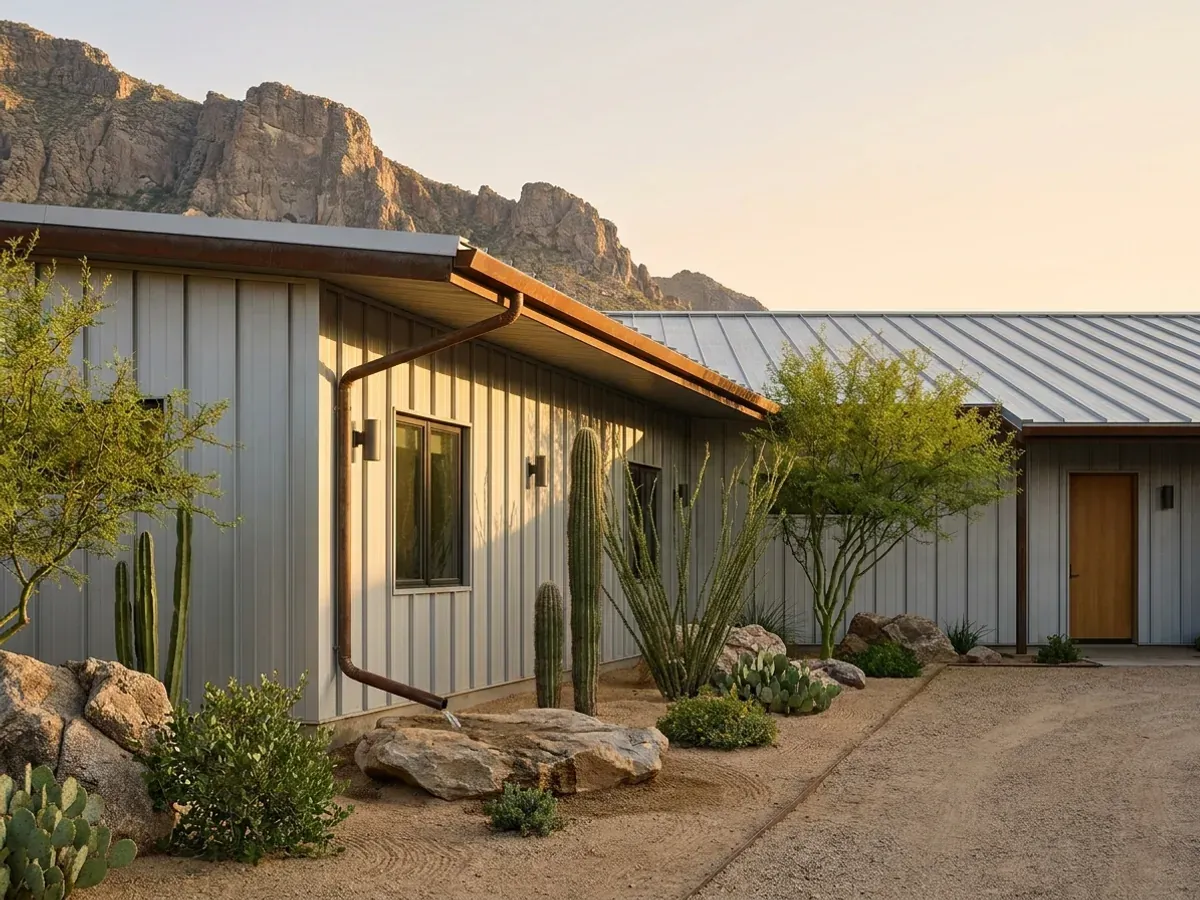
Metal Building Homes in Arizona
A metal building home wraps a steel frame in a metal roof and siding: a skin that sheds water, does not rot and does not burn. In Arizona the envelope is where most of the work is. The Department of Energy lists no statewide residential energy code here, so the insulation your house needs comes from the code your city or county adopted and the climate zone you are in: a 2015 Department of Energy guide puts Maricopa County in zone 2B and Coconino County in 5B. We specify the roof colour, the insulation, the air barrier and the dust seals on paper, so the envelope is built for the desert rather than improvised on site.
Metal Building Homes: how the work runs
Four stages, in this order. The sequence matters more than it looks: getting the design figures, the soil report, the water and septic answers and the permits settled before anything is fabricated is what keeps an Arizona build from stalling.
Panel system, colour and reflectance
Standing seam or exposed fastener, panel gauge, colour and finish warranty come first, because they set the roof geometry. Colour is a performance choice here, not only a look. The Department of Energy says a white or cool-colour roof can reflect up to 90% of the sunlight that hits it, and that coolness is measured by solar reflectance and thermal emittance. We pick the panel by those two numbers as well as by colour.
Insulation to your climate zone
A metal wall has no stud bays to fill, so the assembly is designed: closed-cell spray foam, a framed-out wall with cavity insulation, continuous rigid insulation, or insulated metal panels, with the heat path through each girt and purlin broken rather than ignored. The R-values come from the energy code your jurisdiction adopted for its climate zone. The City of Phoenix adopted the 2024 energy code from August 1, 2025; a Flagstaff house in zone 5B also needs it to work through a 4°F winter design day.
Water and dust at every seam
A large metal roof sheds a lot of water in one place, and in Arizona much of it comes at once. The National Weather Service in Flagstaff says much of northern Arizona gets 40 to 50% of its yearly rain in the monsoon. Gutters and downspouts are sized for bursts and carry water away from the slab. The same seams that keep rain out keep dust out: closures, sealed laps and a sealed ridge matter when a haboob arrives.
Erection, dry-in and finish
Our crews erect the frame, seal the roof and wall panels at every penetration and transition, and then frame and finish the interior. In the high country the last details are about fire as well as weather. The National Weather Service notes that dry-lightning fire starts are common early in the northern Arizona monsoon, and metal panels do not burn, but embers get in through open ridge and soffit vents, so those openings are screened.
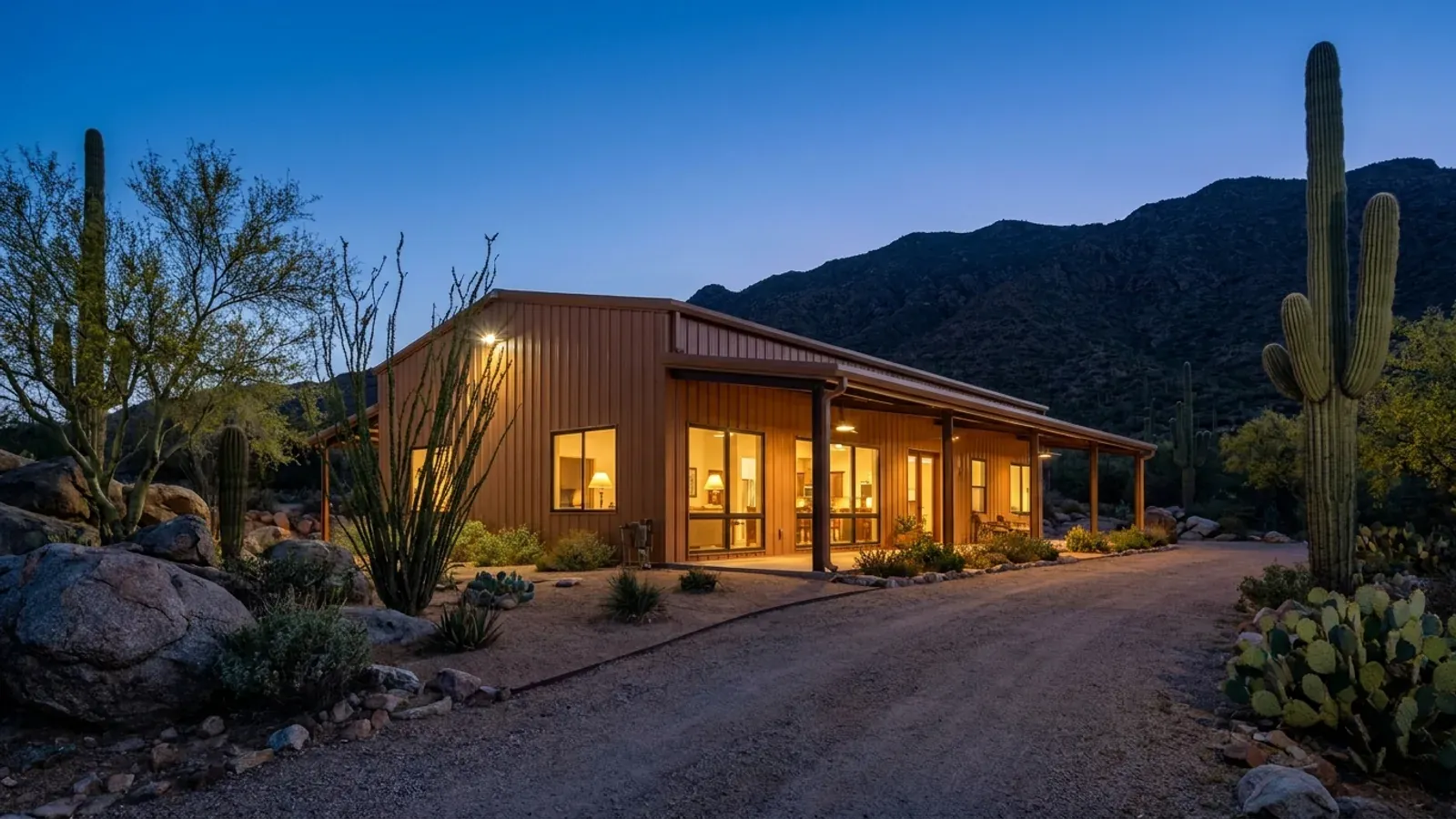
In the desert, the roof colour is part of the cooling system
The Department of Energy says a cool-colour roof can shave at least 5 to 20% from a home's cooling costs, with the most savings in hot climates, and warns it can raise heating needs a little in winter. The City of Phoenix lists a mean annual temperature of 71.2°F in its design table; Flagstaff lists 45.4°F. So a Valley house gets the most reflective roof we can put on it, and a high-country house gets a roof and insulation balanced for both seasons.
Metal Building Homes across Arizona
In Arizona two things change as you cross the state: who has authority over the parcel, and how high it sits. A city, a county and tribal land each answer the permit and zoning questions differently. The low desert around Phoenix, Tucson and Yuma trades snow for heat, termites, monsoon wind and dust; the high country around Flagstaff, Prescott and the White Mountains adds snow load, frost depth and, in forested country, wildfire. Soil, water and septic are settled for every parcel before anything is drawn.
Barndominium builders across Arizona.
Every city and county we serve has its own answer on permits, water, septic and design figures. The service area pages set out what each one publishes.
What actually decides the price
Square footage is the number everyone leads with, and it is rarely the one that moves a barndominium budget. These four do.
-
Insulation method
Closed-cell spray foam, continuous rigid board and insulated metal panels cost more than batts in a framed-out wall, and they handle the steel's heat path better. The climate zone and the energy code decide how much you need.
-
Panel and coating
Standing seam costs more than exposed fastener, and a heavier gauge or a premium coating costs more again. Cool-colour coatings are widely available on metal panels.
-
Wall finish
Full metal siding is the least expensive skin. Stucco, stone or wood-look wainscot, or a mix of materials, costs more, and some subdivisions and districts expect it.
-
Gutters and drainage
A large roof with gutters, downspouts and piping to carry water away from the slab costs more than open eaves, and it protects a foundation on expansive soil from the water that makes it swell.
Metal Building Homes in Arizona: common questions
8 questions we get asked most often about building in Arizona. If yours is not on the list, ask it directly.
Are metal building homes hot in Arizona?
What insulation do you use?
Which energy code applies to my house?
Does a metal roof make noise in monsoon rain?
Can a metal building home look like a regular house?
How do you keep dust out?
Do metal homes rust in Arizona?
Are metal homes safer in a wildfire?
Keep reading
The pages that answer the next question this one raises.
Ready to put metal building homes against a real plan? Start there and the rest follows.
Tell us about the land
Tell us where the parcel is and what you want on it, and we will come back with who has jurisdiction, what the land needs before it can be built on, and how we would build it. Starting the survey costs nothing.